

15th Annual Conference
2025
The 15th Annual Ohio River Valley Cytometry Association Meeting
Imaging and Cytometry Research Day
Thursday, August 28, 2025
Keynote Speaker
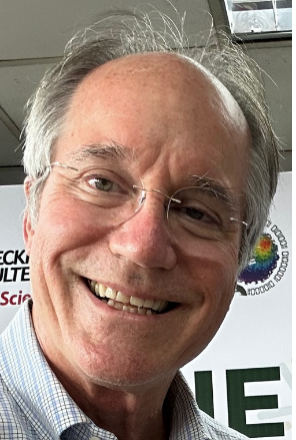
Paul K. Wallace, Ph.D.
Professor Emeritus
Roswell Park Comprehensive Cancer Center
Title: Convergence in Cytometry: Rainbows and Reasoning in the Pursuit of AML Residual Disease
Paul K. Wallace, Ph.D., is an internationally recognized expert in clinical cytometry, immunology, and cancer diagnostics. He currently serves as Educator in Chief for the International Society for Advancement of Cytometry (ISAC) and is Professor Emeritus of Oncology at Roswell Park Comprehensive Cancer Center, where he led the Flow and Image Cytometry Department for nearly 20 years. He is also Chief Scientific Officer at SciGro, Inc., supporting development of flow cytometric reagents and clinical assays.
Dr. Wallace earned his Ph.D. in Immunology and Microbiology from the Medical College of Pennsylvania in 1993, following graduate and undergraduate studies at Idaho State University and New England College. Early in his career, he co founded Zynaxis Cell Science and helped develop PKH cell tracking dyes.
A pioneer in minimal residual disease detection, immune monitoring, and high parameter cytometry, he has authored more than 500 publications and contributed to major clinical guidelines. His work has advanced understanding of myeloma, AML, ALL, immune dysfunction, stem cell transplantation, and immunotherapy.
A dedicated educator, he has trained scientists worldwide and taught at workshops across multiple continents. His contributions have earned numerous honors, including the Wallace H. Coulter Award for lifetime achievement in clinical cytometry.
Featured Speaker
Alexis Conway, Ph.D.
ACM Global Laboratories
Title: Validation of Panels in Translational Research/Clinical Trials: A Framework for Rigor and Reproducibility
In the field of flow cytometry, the concepts of rigor and reproducibility are paramount to advancing scientific research and translational studies. Rigor encompasses the disciplined application of the scientific method, necessitating well-defined experimental designs, standardized protocols, and comprehensive quality control measures. Reproducibility implies that independent individuals can replicate findings using the same methodologies, thus reinforcing the validity of the findings. Despite challenges such as manual gating subjectivity, instrument variability, and inconsistencies in sample preparation, strategies can be employed to enhance both rigor and reproducibility. Addressing these challenges can be achieved through automated data analysis, standardized protocols, quality control measures, and comprehensive training on experimental protocols for staff particularly in clinical trials and translational studies. Ultimately, ensuring rigor and reproducibility in flow cytometry not only validates research findings but also fosters a collaborative scientific environment conducive to trustworthy advancements in the translational studies field.
Local Speaker
Trisha Wise-Draper, M.D. Ph.D.
Professor
University of Cincinnati
Title: Bedside to Bench and Back with Multi-Color Flow Cytometry & Imaging to Improve Patient Treatment Response
Trisha Wise-Draper is a Professor of Medicine in the Division of Hematology/Oncology, and Section Head of Medical Oncology. She is co-leader for the Head and Neck Disease Group and the former Medical Director of the UCCC Clinical Trials Office and CTO Lab at the University of Cincinnati Cancer Center and most recently named the Deputy Director of the Office of Clinical Research for the University of Cincinnati. Dr. Wise-Draper is nationally recognized for her research in the development of innovative cancer therapies by performing translational research in her laboratory on therapy resistance mechanisms and biomarker identification specifically in head and neck cancer and other solid tumors. Her specific interests include novel immunotherapy combinations for head and neck cancer. She is also the recipient of grants from the Department of Defense, American Cancer Society, and NIH/NCI. She has developed several investigator-initiated trials in Head and Neck Cancer most of which have been published in clinical cancer research including a window of opportunity study of pembrolizumab neoadjuvantly in resectable disease presented at ASCO 2021 which was the first study to suggest immunotherapy pathological response may predict long term outcomes. She also serves as PI on several industry and cooperative group studies at her institution. She was named Clinical Trialist of the Year at the University of Cincinnati in 2019 and 2024 after receiving the Rising Star Award in 2018, and the Research Service Award in 2022, and has been selected as a Cincinnati Top Doctor every year since 2016. She is a senior editor of clinical cancer research and chair of the previously untreated locally advanced (PULA) working group for NRG. She serves on the Head and Neck Steering Committee for the NCI, and the Head and Neck Cancer Core committee for NRG and is an active member of ASCO, AACR, ESMO, and SITC.